
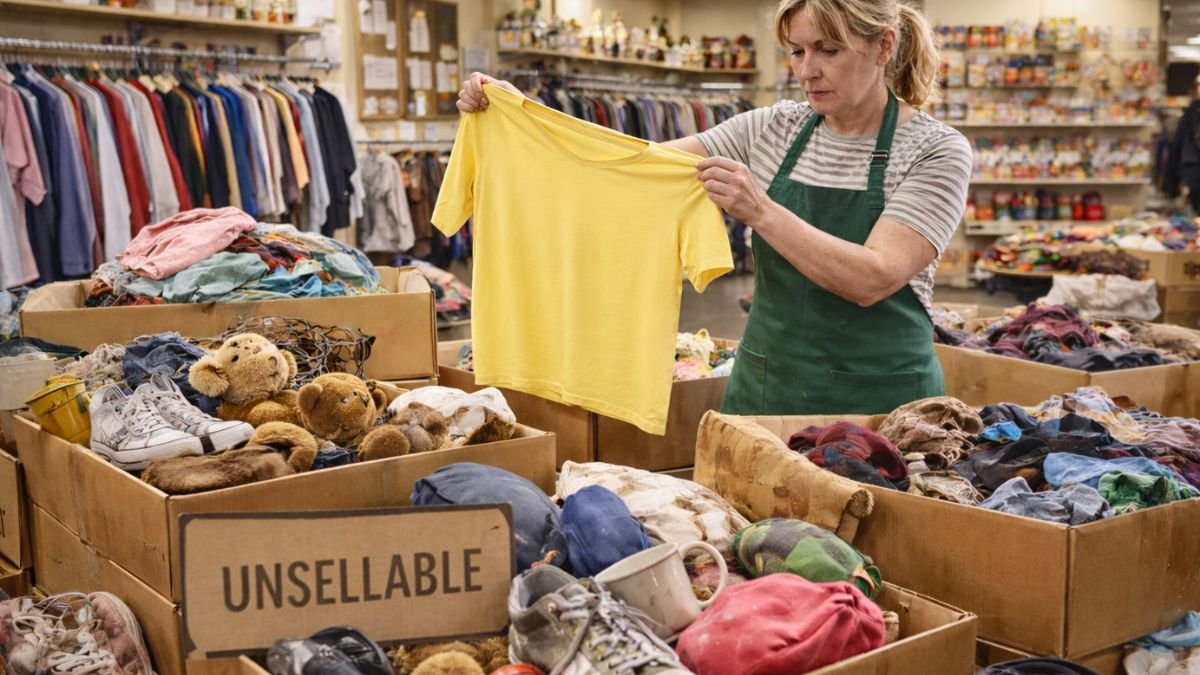
A hospice charity in North West England is raising concerns after revealing it spends over £1,000 every month disposing of donated items that cannot be sold.
The issue highlights a growing challenge faced by many charity shops—while donations are essential, not all contributions are helpful.

Organizations like St John’s Hospice rely heavily on public generosity, but the increasing volume of damaged and unsuitable items is creating financial and operational pressure.
Rising Problem of Unsellable Donations
Charity shops are designed to turn donated goods into funds for vital services. However, many items received are in poor condition and unsuitable for resale.
Common Problem Items:
- Torn or heavily stained clothing
- Broken furniture
- Faulty electrical goods
- Incomplete or damaged household items
Volunteers often encounter unusable goods, including hazardous items such as broken glass. These items cannot be sold and must be safely disposed of, adding to operational costs.
Financial Impact on Charity Operations

The cost of removing unsellable items has now exceeded £1,000 per month, a significant burden for a charity that depends on donations to fund patient care.
This expense diverts resources away from:
- Medical support services
- Patient and family care
- Community outreach programs
Instead of generating income, poor-quality donations are creating additional costs, reducing the overall effectiveness of fundraising efforts.
Why Thoughtful Donations Are Essential

Charity leaders are urging the public to rethink what they donate. While generosity is appreciated, the focus must shift toward quality over quantity.
According to charity representatives, suitable donations include:
- Clean, wearable clothing
- Functional furniture with safety labels
- Complete and usable household items
A simple guideline is: if you wouldn’t give the item to a friend or family member, it likely isn’t suitable for donation.
Emotional Impact on Staff and Volunteers
The issue is not just financial—it also affects morale.
Staff and volunteers feel discouraged when:
- Valuable funds are spent on waste disposal
- Donations cannot be used to support the charity’s mission
For many involved, it is frustrating to see resources diverted away from helping patients and families in need.
Safety Concerns for Volunteers
Another major concern is the safety of volunteers who sort through donations.
Risks Include:
- Injuries from broken glass
- Handling unsafe electrical items
- Exposure to hazardous materials
Charity shops depend on volunteers, and ensuring a safe working environment is a top priority. Reducing unsuitable donations plays a key role in protecting them.
Supporting the Mission Through Better Donations
Charity shops are a vital source of funding for services provided by organizations like St John’s Hospice.
When donations are appropriate:
- Items can be sold
- Revenue is generated
- Funds directly support patient care
However, unsuitable donations create the opposite effect—adding costs and limiting the charity’s ability to deliver essential services.
Conclusion
The situation faced by St John’s Hospice highlights an important lesson: not all donations are beneficial. While public generosity remains invaluable, the impact of donations depends on their quality and usability.
By donating clean, safe, and functional items, individuals can ensure their contributions truly support those in need.
Thoughtful giving not only reduces waste but also maximizes the positive impact on communities and essential services.
