
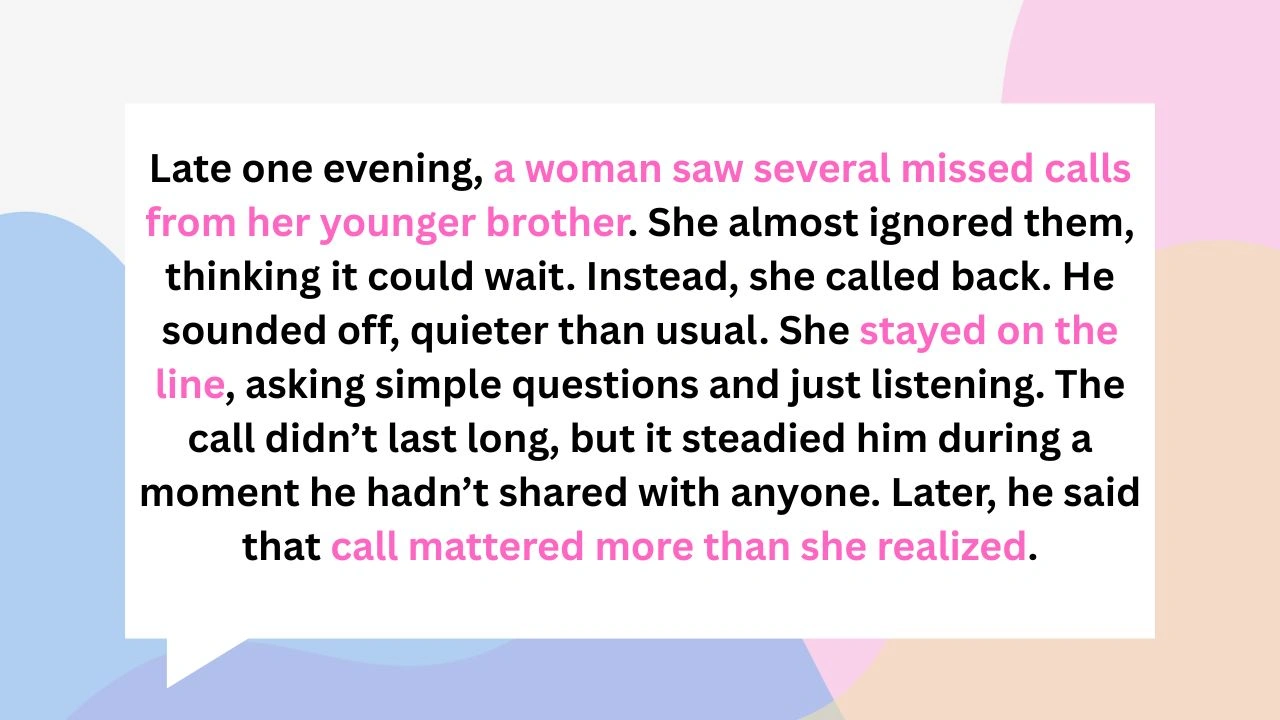
Happiness rarely arrives with noise. It doesn’t knock loudly or demand attention. More often, it slips quietly into ordinary days, hidden in small gestures that almost go unnoticed. A held door, a patient pause, a kind word when no one expects it. These moments don’t look important at first, but they settle deep, shaping how people feel, how they heal, and how they remember each other.
A Lunchbox Left on the Table
A young boy forgot his lunch one rushed morning. His mother realized too late, already halfway to work. That afternoon, he sat quietly while others ate. His teacher noticed and shared her own meal without making it obvious. Years later, he still remembered not the hunger, but the feeling of being seen without embarrassment. It shaped how he treated others in similar moments.
The Bus Seat That Changed a Day
A tired woman boarded a crowded bus after a long shift. No seats were free until a teenager stood up and offered his. He didn’t say much, just nodded politely. That small act didn’t fix her exhaustion, but it softened something inside her. It reminded her that kindness still existed in ordinary spaces, even after difficult days.
A Message Sent at the Right Time
A man hesitated before texting an old friend he hadn’t spoken to in years. He kept it simple, just asking how they were doing. That message arrived at a moment when his friend felt completely alone. It didn’t solve everything, but it reopened a connection that had quietly faded. Sometimes reaching out matters more than saying the perfect thing.
Staying a Few Minutes Longer
At work, a manager noticed one employee lingering after hours, struggling with a task. Instead of leaving, she stayed back and helped without making it formal. It wasn’t part of her job description. That extra time built trust and confidence. The employee later said it was the first time they felt supported, not judged.
The Neighbor Who Paid Attention

An elderly man lived alone next door. A young couple noticed his routine slowly change. One evening, they knocked just to check in. He was unwell and needed help. Their attention likely prevented something worse. It wasn’t a dramatic rescue, just quiet awareness that made all the difference.
A Simple Apology
A sister realized she had been distant and harsh during a stressful period. Instead of just moving on, she apologized sincerely. No excuses, no defensiveness. That moment didn’t erase past tension instantly, but it opened the door to repair. Sometimes kindness means admitting fault and choosing connection over pride.
Holding Space Without Fixing
A friend sat quietly while someone shared their struggles. No advice, no interruptions, just listening. It felt unusual at first, but deeply comforting. Not every situation needs a solution. Being present without trying to fix everything can be one of the most powerful forms of compassion.
Letting Someone Go First
In a long queue at a grocery store, a man noticed someone behind him with only one item. He stepped aside and let them go ahead. It saved only a few minutes, but it changed the tone of that interaction. Small gestures like this create brief moments of relief in otherwise routine days.
Encouragement at the Right Moment
A teacher noticed a quiet student doubting their abilities. Instead of waiting for results, she encouraged them early, pointing out effort rather than perfection. That encouragement stayed with the student longer than any grade. It shifted how they saw themselves and their potential.
Sharing Credit Instead of Taking It
At work, a team project succeeded, and one member made sure to highlight everyone’s contribution instead of claiming recognition. It built trust and respect. People felt valued, not overlooked. Quiet generosity in professional spaces often leaves a lasting impression.
Remembering Something Small
A colleague remembered another coworker’s preference for tea instead of coffee and brought it one day without being asked. It was a tiny detail, but it showed attention and care. Being remembered in small ways often matters more than grand gestures.
Choosing Patience Over Reaction
In a tense moment, someone chose to respond calmly instead of reacting in anger. It deescalated the situation and prevented unnecessary conflict. That single decision changed the direction of the conversation and preserved a relationship that could have easily been damaged.
Conclusion
These moments don’t stand out in headlines, but they shape everyday life in quiet, meaningful ways. Kindness and compassion don’t need to be loud to be powerful. They grow through simple actions, thoughtful choices, and genuine care. Over time, these small moments build something bigger than themselves. They create trust, connection, and a sense of belonging that defines true happiness.
